

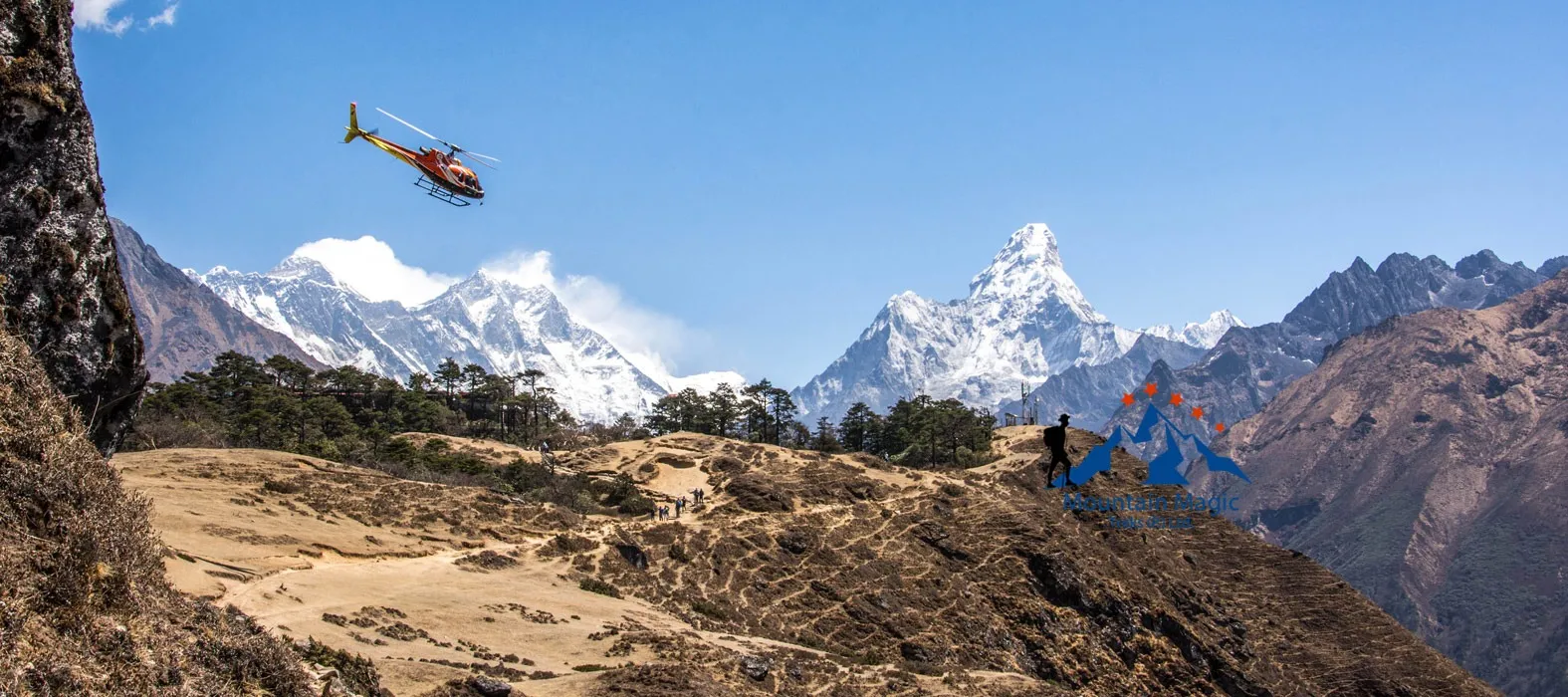
The mountains of the Everest region create a sound environment that can feel very different from a busy city. A voice may travel across an open valley, a distant river can remain audible from far away, and a helicopter may be heard before it becomes visible. These experiences are connected to the shape of the landscape and the way sound moves through the air.
The Everest Base Camp Trek with Helicopter Return passes through deep valleys, narrow mountain passages, open slopes, and high settlements. Each location creates different conditions for hearing natural and human-made sounds. Understanding these effects adds another layer to the experience of traveling through the Khumbu region.
Why Sound Behaves Differently in Mountain Valleys
Sound travels through air as waves. When these waves meet mountains, cliffs, buildings, or other surfaces, they can be reflected, absorbed, or redirected.
The shape of the surrounding landscape has a major effect on what people hear. A sound may seem louder in one location and disappear quickly in another.
How Mountain Echoes Form
An echo happens when sound waves reflect from a surface and return to the listener after a short delay. Large rock faces and steep mountain walls can reflect sound under suitable conditions.
In a deep valley, a loud call may produce a noticeable echo if the surrounding surfaces are positioned correctly. However, not every valley creates a clear echo because distance, wind, surface material, and valley shape all matter.
Why Some Sounds Travel Farther
Open areas may allow sound to travel without being blocked by nearby buildings or dense vegetation. A person standing across a valley might hear a distant voice or animal sound under favorable conditions.
This does not mean sound always travels farther at high altitude. Temperature, wind direction, background noise, and air conditions also affect how clearly a sound reaches the listener.
How the Khumbu Valley Changes What Trekkers Hear
The trekking route moves through different landforms, from river valleys and forests to exposed mountain terrain. The sounds along the route change with these surroundings.
Near Lukla and Phakding
The lower sections of the route contain settlements, rivers, bridges, and vegetation. Trekkers may hear flowing water, conversations, bells from pack animals, and movement around lodges.
The Dudh Koshi River can create a steady background sound in some locations. Its volume may make nearby conversations harder to hear, especially close to fast-flowing sections.
Around Namche Bazaar and Tengboche
As the trail climbs, the landscape opens into wider mountain views and more exposed slopes. Sounds from villages, monasteries, and passing trekkers may carry across open areas.
Wind can also become noticeable in exposed locations. It may cover quieter sounds or make distant voices difficult to understand.
Near Dingboche, Lobuche, and Gorakshep
The upper route has fewer trees and more exposed rocky terrain. Wind and distant natural sounds may become more noticeable because there is less vegetation and fewer built structures.
The surrounding mountain walls and valleys can affect how sound moves between locations. However, trekkers should not assume that a distant sound gives an accurate indication of where an activity is happening.
The Sound of Rivers, Glaciers, and Natural Movement
The Khumbu landscape contains several natural sources of sound. Some are easy to recognize, while others may be difficult to identify from a distance.
Flowing Water
Rivers and streams produce sound as water moves around rocks, drops over small edges, and passes through narrow channels.
Near the Dudh Koshi Valley, flowing water can create a continuous background noise. Smaller streams may sound different depending on their size and the surrounding terrain.
Moving Ice and Falling Rocks
Glacial environments can produce occasional cracking, shifting, and falling-rock sounds. These events are part of natural mountain processes.
A sound heard near a glacier does not always reveal its exact source. Do not approach unstable slopes or glacier areas to investigate unusual noises. Follow the established route and your guide’s instructions.
Animal Sounds
Bird calls and sounds from domestic animals are also part of the region’s natural and working landscape. Bells worn by pack animals may be heard along busy sections of the trail.
These sounds can help trekkers become aware of activity nearby, but they should still look around carefully and follow local trail etiquette.
How Wind Affects Hearing at High Elevation
Wind is a major source of background noise in exposed mountain locations. It can make speech unclear, particularly when people are standing far apart.
Speaking During Strong Wind
When wind moves directly around the ears or microphone, it can interfere with hearing and recording. A conversation that sounds clear inside a teahouse may become difficult outdoors.
Move to a sheltered location when discussing important instructions. If you cannot hear your guide clearly, ask them to repeat the information rather than guessing.
Listening Near Open Slopes
Avoid standing too close to unstable edges or steep slopes just to hear someone speaking. Choose a secure position where the group can communicate without creating additional risk.
During difficult weather, remain with the group and follow the guide’s directions.
Helicopter Noise Around Gorakshep
The helicopter return is a distinctive part of this itinerary. Aircraft noise can be much louder than ordinary village or trail sounds, particularly when a helicopter is operating close to a high-altitude landing area.
Why Helicopter Noise Seems So Strong
Helicopters produce sound through their engines and rotating rotor blades. The sound can travel across open terrain and reflect from surrounding mountain surfaces.
At a remote settlement such as Gorakshep, there may be less everyday background noise to mask the aircraft sound. This can make a helicopter seem especially loud.
Follow Landing-Area Instructions
Passengers should remain in the designated safe area and follow instructions from the crew and trekking team. Never approach a helicopter until authorized.
Keep loose clothing and personal belongings secure. Do not attempt to record audio or take photographs if doing so distracts you from safety instructions.
The Everest Base Camp Trek with Helicopter Return depends on suitable flying conditions, aircraft availability, and operational safety. Noise alone does not indicate that a helicopter is ready for boarding or that a flight will depart.
Respecting Quiet Areas and Local Communities
Mountain settlements are working communities, not just visitor attractions. Loud music, shouting, and unnecessary noise can disturb residents and other travelers.
Near monasteries and religious spaces, visitors should be especially considerate. Keep conversations quiet, follow posted rules, and avoid interrupting ceremonies.
Inside shared teahouse dining rooms, use phones and speakers at a reasonable volume. Other guests may be resting, eating, or preparing for the next walking day.
Final Thoughts
The Khumbu region has a distinctive sound environment shaped by its valleys, cliffs, rivers, wind, wildlife, and settlements. Mountain echoes and changing background noise can make familiar sounds feel different throughout the journey.
The Everest Base Camp Trek with Helicopter Return offers opportunities to experience these natural sounds while traveling through the lower valleys and high mountain settlements. Listening carefully can make the landscape more interesting, but visitors should always prioritize safe walking, clear communication, and respect for local communities.
Frequently Asked Questions
1. Do echoes occur in the Everest region?
Yes. Suitable mountain walls and valley shapes can reflect sound and create echoes, although the effect depends on the location and weather conditions.
2. Why is the Dudh Koshi River easy to hear in some places?
Moving water produces continuous sound, especially where it passes over rocks or through narrow channels. The surrounding landscape affects how far that sound can be heard.
3. Can wind make it difficult to hear a trekking guide?
Yes. Strong wind creates background noise and can make speech unclear. Ask your guide to repeat important instructions if you cannot hear them properly.
4. Is helicopter noise very loud at Gorakshep?
Helicopters produce substantial noise, and the open mountain environment can make it especially noticeable. Passengers should follow all crew and ground-staff safety instructions.
5. Should trekkers use speakers or play music on the trail?
It is better to avoid loud music and speakers. Keeping noise low respects local communities, wildlife, guides, and other trekkers.
